

Aruba's Wild Side: Nature, Animal & Eco-Friendly Experiences Beyond the Beach
Welcome to Aruba, our One Happy Island. Most visitors land here picturing palm-lined beaches and turquoise water, and yes, Eagle Beach and Palm Beach absolutely deliver. But we love showing people the other side of paradise: a national park covering nearly a fifth of the island, calm mangrove lagoons you can paddle straight through, sanctuaries doing real conservation work, and rugged coastlines you can ride along on horseback.
Consider this your insider guide to the wilder side of Aruba: where to go, what to expect, and a few things we wish we'd known the first time around. If you want to come home with more than a tan, you're in the right place.
Arikok National Park: The Heart of Wild Aruba
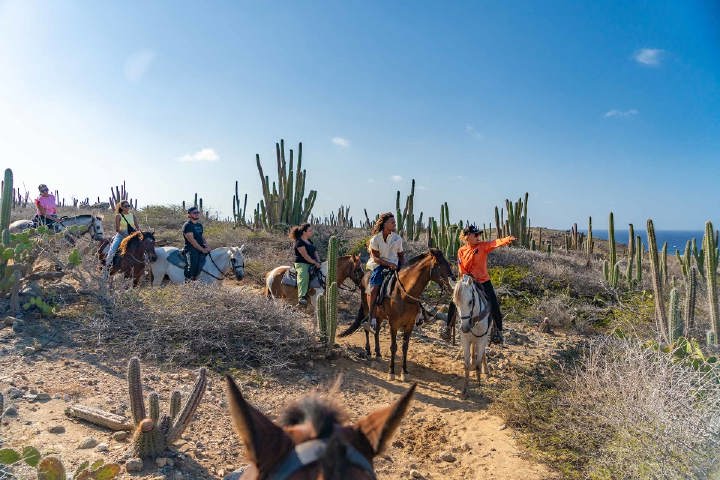
If you only do one nature experience on the island, make it Arikok. The park covers about 18% of Aruba: caves, rolling dunes, ancient rock formations, dramatic windward coastline, and the cactus-and-divi-divi landscape that surprises people who only expected white sand.
Getting in: A valid conservation day-pass is required. Buy it at the San Fuego entrance or the Vader Piet entrance. Bring a card or cash. Adults USD 22 per person, children under 17 free. The pass is valid for the day.
What lives here: Aruba's two endemic birds, the Shoco (burrowing owl, the national symbol) and the Prikichi (parakeet), both call Arikok home. The island has 34 endemic species and over 200 bird species in total, and most of them live inside the park.
Our tip: visit in fall or early winter. Aruba isn't a desert all year round. Our short rainy season (roughly October through December) turns the park lush and green: cacti bloom, the dry rooi (riverbeds) briefly fill, and the whole landscape looks completely different from the dry-season postcards.
Guided hikes worth knowing: The Aruba Conservation Foundation (ACF) runs monthly group hikes that visitors can join, including full moon hikes and proper "rough hikes" that aren't just a stroll. Two routes we recommend with a guide: Miralamar (mining ruins, coastal views) and Rooi Tambu (a different ecosystem, much less visited). Check the calendar at acf.aw before your trip.
Inside the park: ATVs, UTVs and motorbikes are not permitted within Arikok or any other protected nature areas. The best ways to explore here are on foot (hiking, including the guided ACF routes), by mountain bike, or with a licensed 4×4 jeep tour. If you've got your heart set on an ATV or UTV ride, save it for the rugged terrain outside the park (the area around Daimari and the north coast has plenty of options), and you'll get the adventure without disturbing the protected landscape.
.jpg)
How the Experiences Compare: A Quick Reference
| Experience | Cost | Time needed | Best for |
|---|---|---|---|
| Arikok National Park | USD 22 adults / kids free | Half-day to full day | Hikers, photographers, anyone curious |
| Donkey Sanctuary Aruba | By donation | 30 to 60 min | Families, animal lovers |
| The Butterfly Farm | Paid ticket (unlimited returns) | 30 to 45 min | Families with young kids |
| Aruba Ostrich Farm | Paid tour | ~45 min | Families, quirky photos |
| Philip's Animal Garden | Paid entry | 60 to 90 min | Animal lovers, supporting rescue |
| Spanish Lagoon clear kayak (Delphi) | Paid tour | 2 to 3 hrs | Adventure, beginners welcome |
| Monforte Luxury Lagoon Cruise | Premium | Half-day | Couples, easy luxury at sea |
| Aruba Horse Tours (incl. Wariruri Beach) | Paid tour | ~2 hrs | Romantics, beginner-friendly |
| Tierra del Sol Golf Course | Premium green fees | 4 to 5 hrs | Golfers |
Water and Lagoon Experiences
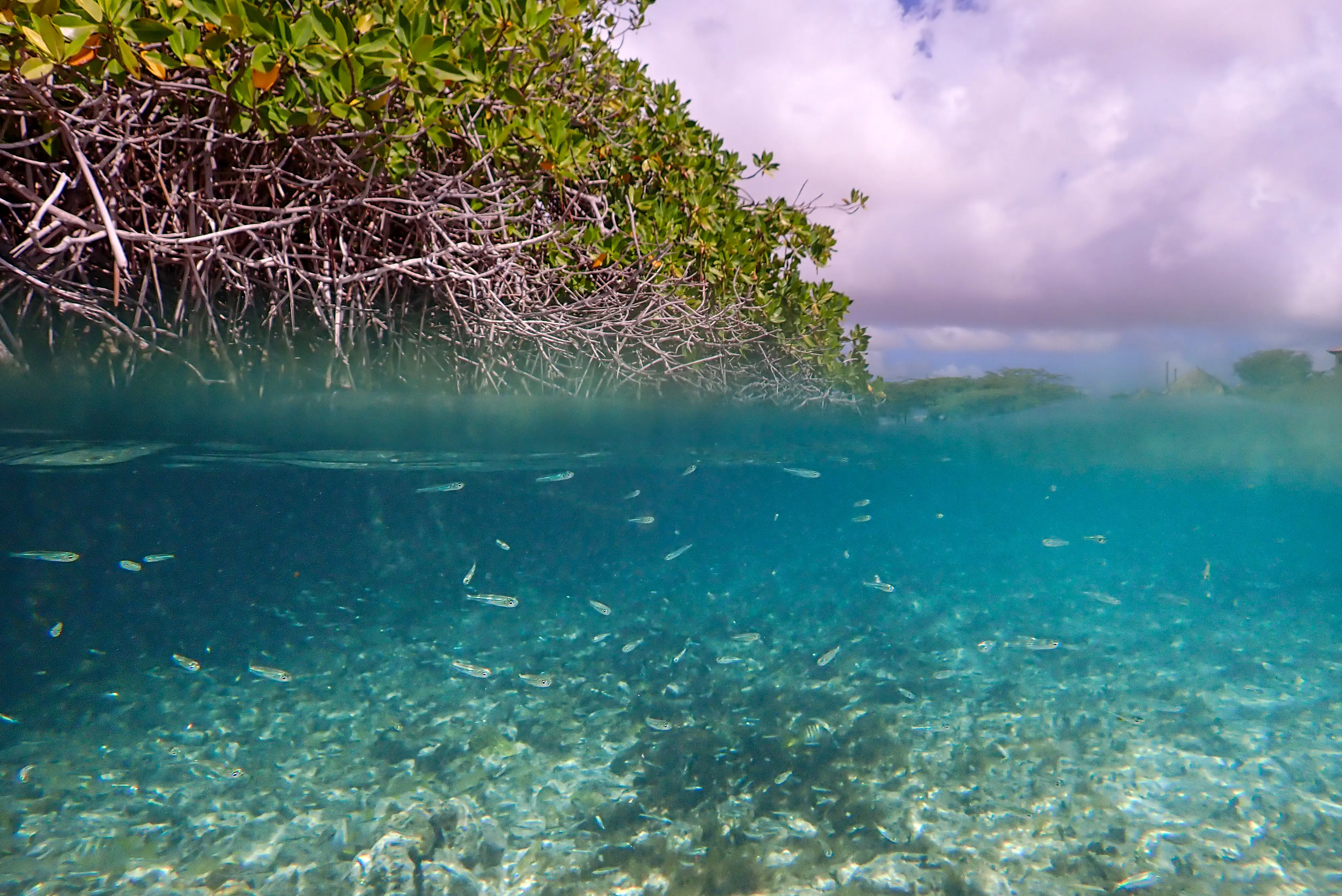
Aruba's south side has a string of protected lagoons that hardly anyone outside the local kayaking community talks about, and we love sending people there.
Spanish Lagoon is a protected wetland with mangroves, calm water, and a marine ecosystem you can paddle right through. Delphi Watersports runs clear-bottom kayak tours here that we genuinely love: you can see fish under your boat without snorkeling. Our top pick if you want nature without committing to a full hike.
Mangel Halto, just east of Spanish Lagoon, is where we send friends who want to paddleboard or kayak in calm, clear water without any waves. There's a small beach, mangroves, and decent snorkeling just offshore.
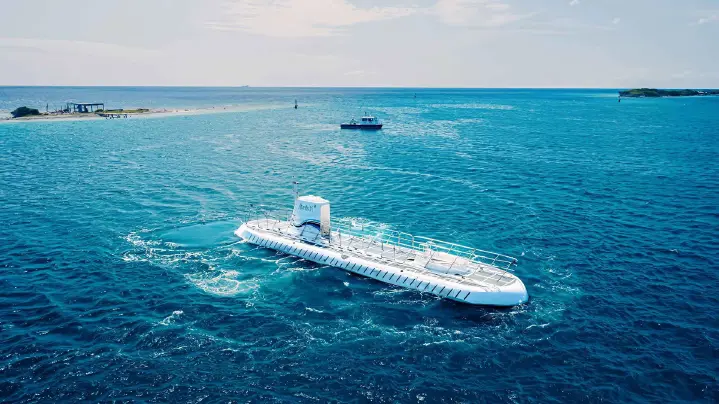
For a more polished day on the water, the Monforte Luxury Lagoon Cruise is a beautiful sailing trip that combines time on the boat with stops for swimming, snorkeling and soaking in the views. Onboard drinks, music and a relaxed pace make it a favorite for couples and small groups who want the lagoon experience without lifting a paddle.
Bubali Bird Sanctuary, near Palm Beach, is a free protected wetland with an observation tower. We stop here when we're already in the area: herons, egrets, cormorants, and (with luck) a few migratory species. Best at sunrise or just before sunset.
Reef-safe sunscreen is non-negotiable if you're getting in the water. Aruba's marine life is part of why our island is so special, and standard SPF damages coral and reef fish. We use this reef-safe SPF and pack a separate jellyfish/sea-lice SPF for kayak days.
Animal Encounters That Actually Help Animals
If you've got kids, or you're just an animal person, Aruba has four spots that consistently surprise visitors.
Donkey Sanctuary Aruba is our personal favorite. It's a non-profit that rescues the island's wild donkey population, descendants of donkeys brought by the Spanish in the 1500s. Entry is by donation. You can feed and brush them. We've sent dozens of families here and not one has come back disappointed. Updates and opening hours on their Facebook page.
The Butterfly Farm in Palm Beach is a small enclosed garden filled with butterfly species from around the world. Tickets are valid for unlimited returns during your trip, which most people don't know. Going twice (once in the morning, once again after a few days when you've learned what to look for) is the best way to do it. Read more on our Butterfly Farm discover page.
Philip's Animal Garden in Noord is a rescue facility for animals that have ended up on Aruba and can't be released, including monkeys, kangaroos, llamas and a sloth. Smaller and more rough-around-the-edges than a polished zoo, which is part of why we like it. It's a real rescue, not entertainment.
Aruba Ostrich Farm runs a guided tour where you'll feed and learn about ostriches and emus. Quick, fun, and surprisingly photogenic, about 45 minutes door-to-door from most resorts.

Aruba on Horseback
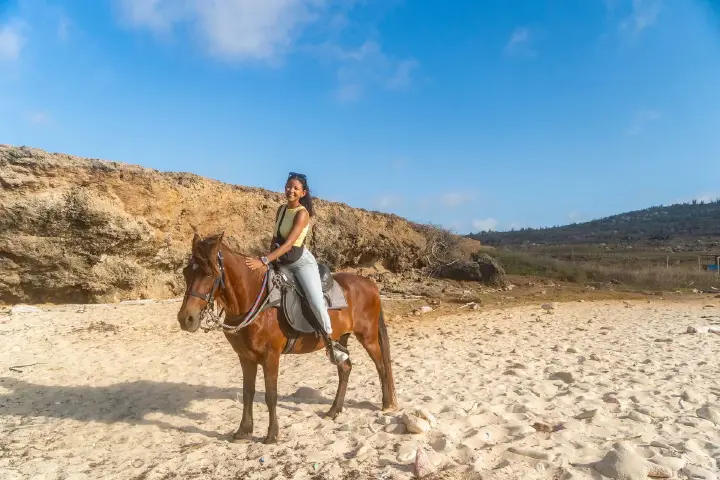
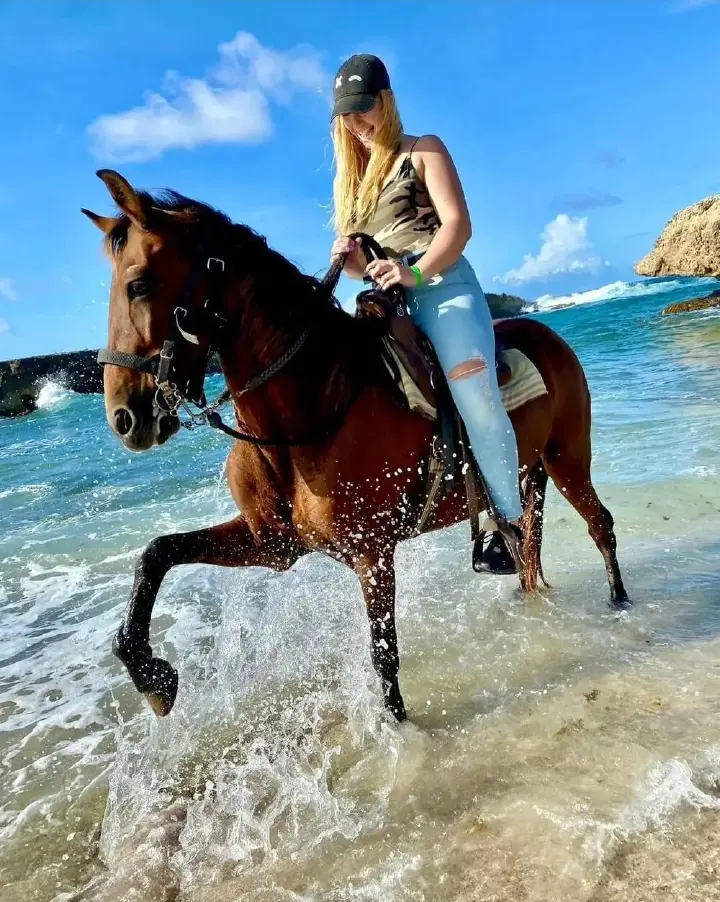
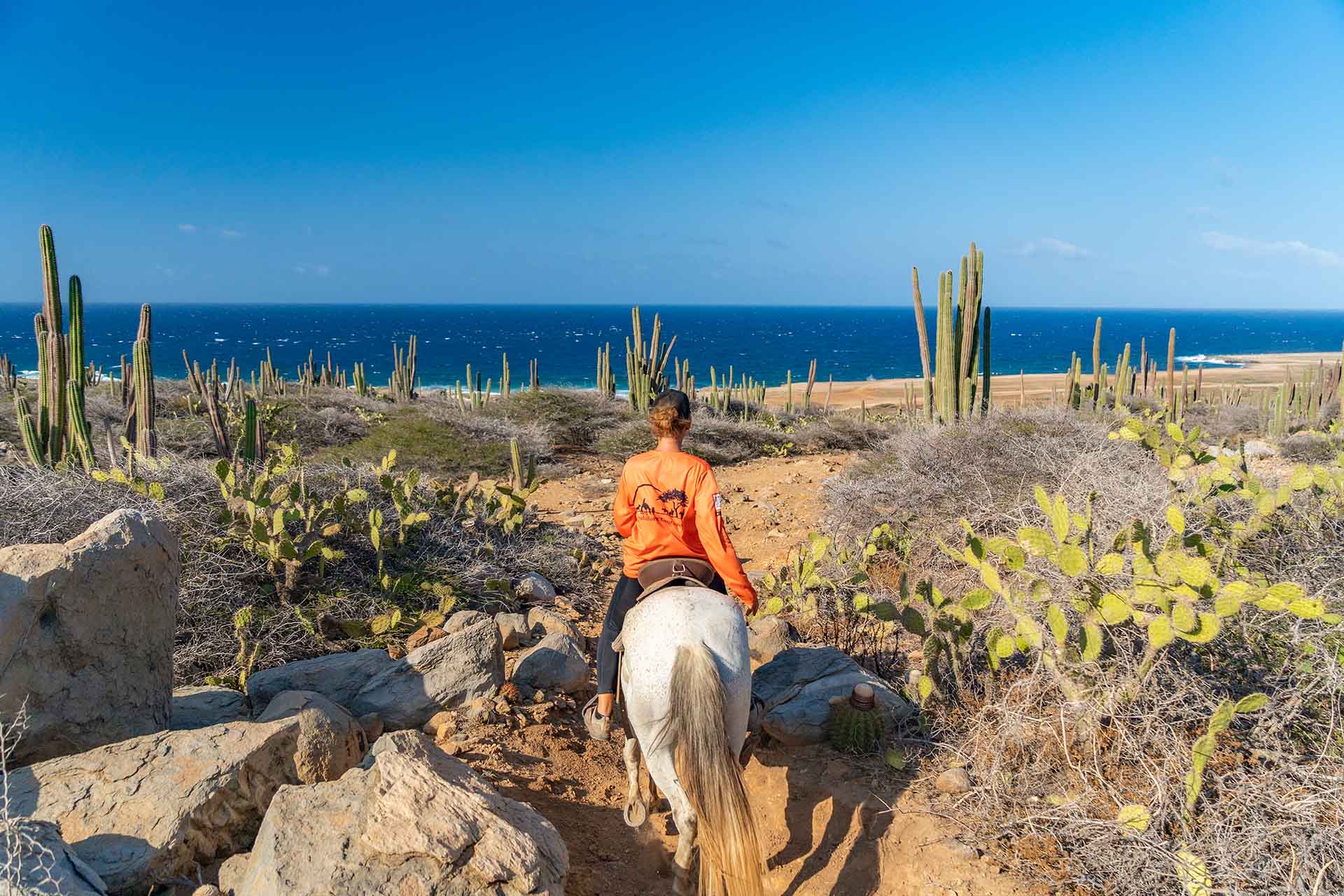
One of the best ways to see Aruba's interior is on horseback. Aruba Horse Tours runs trail rides through the desert landscape and along Wariruri Beach on the rugged north coast, passing landmarks like the Bushiribana gold-mill ruins and the Natural Bridge area along the way. It's the kind of cinematic ride people post photos of for years afterward. Suitable for beginners and experienced riders. Book ahead, since small group sizes fill up fast in high season.
Dunes, Lighthouses and Quieter Corners
The dunes near the California Lighthouse, on the northwest tip, are one of the most photographed-yet-undertold spots on the island. Pale sand, low scrub, the lighthouse on the hill, and almost always quiet at sunrise. Park at the lighthouse and walk over.
If you've got a rental car, the dunes pair beautifully with a lap of the north coast: Alto Vista chapel, the Bushiribana Ruins, and back via Andicuri.
Tierra del Sol: Golf in the Landscape
If you're a golfer or just want a more relaxed outdoor day, Tierra del Sol Golf Course by Iberostar is the only championship course on the island. The course is built into the natural landscape: cacti, ocean views, the lighthouse on the horizon, and the wildlife on the back nine is part of the round. Tee times go faster than people expect, so book ahead.
How to Explore Responsibly (and Why It Matters)
Aruba is small. About 32 km long, with limited fresh water and ecosystems that have already been hit hard by past development. The reason we still have a national park, a healthy reef and visible wildlife is the conservation work the Aruba Conservation Foundation has done, together with the visitors who follow the rules.
- Stay on marked paths. The vegetation looks rough but it's slow-growing, and once trampled, it takes years to recover.
- Use reef-safe sunscreen anywhere near the water. Standard SPF is one of the biggest killers of Caribbean coral.
- Don't feed wildlife, except at the official sanctuaries, where it's part of the program.
- Leave no trace. Pack out everything you packed in, and a little extra if you find litter on the trail.
What to Pack for an Outdoor Day in Aruba
Whether you're hiking Arikok or kayaking Spanish Lagoon, this is what we never leave the house without:
- A real daypack, small enough to carry comfortably, big enough for water and a layer (our daypack pick)
- Reef-safe SPF (reef-safe) plus a jellyfish/sea-lice SPF for kayak and snorkel days
- A wide-brim sun hat, since Aruba sun is stronger than you'd expect (sun hat)
- Water shoes for kayak and lagoon days (water shoes)
- A waterproof phone case for paddleboarding and kayaking (phone case)
- A reusable water bottle, because Arikok has limited shade so hydrate constantly (water bottle)
- Insect repellent, only really needed near Bubali at dusk (repellent)
- Small first aid kit and after-sun for the inevitable mild sunburn (first aid kit)
Our Honest Recommendation
If you have one full day, do Arikok in the morning and the Donkey Sanctuary in the afternoon. If you have two days, add a kayak trip to Spanish Lagoon. If you have three or more, throw in a sunrise horseback ride along Wariruri Beach. That sequence has worked for every guest we've sent, from solo travelers to families with kids to couples doing both beach and active days.
Aruba is small enough to do all of this in a single trip without burning out. The hard part is just deciding to leave the beach for a morning. Once you do, the island opens up.
Ready to plan? Pick up your Arikok day-pass info from ACF, book a horseback ride through us, and arrange a rental car ahead of time so you're not stuck depending on resort shuttles. Bon bini, and welcome to the wild side of our One Happy Island!
Photography: Main image & park photos by Aruba Conservation Foundation