

8 Fascinating Facts about Aruba
Welcome to Aruba, One Happy Island, where the trade winds keep the island perfectly comfortable and the sun shows up almost every single day. Most visitors come for the white-sand beaches and calm Caribbean waters, and honestly, who could blame them? But Aruba has so much more to offer than its beautiful coastline.
As local island experts, we know that some of Aruba’s most interesting stories are found beyond the beach - in its landscapes, culture, history, sports, and even its signature drinks. That’s why we’ve gathered 8 fascinating facts about Aruba that many visitors never hear about, but are definitely worth knowing before you arrive.
Consider this your local guide to eight special things about Aruba - from geological wonders and sporting legends to a cocktail with deep island roots. These facts will give you a deeper look at the island and help you experience Aruba with a little more local insight.
1. The Cocktail That Was Actually Invented Here
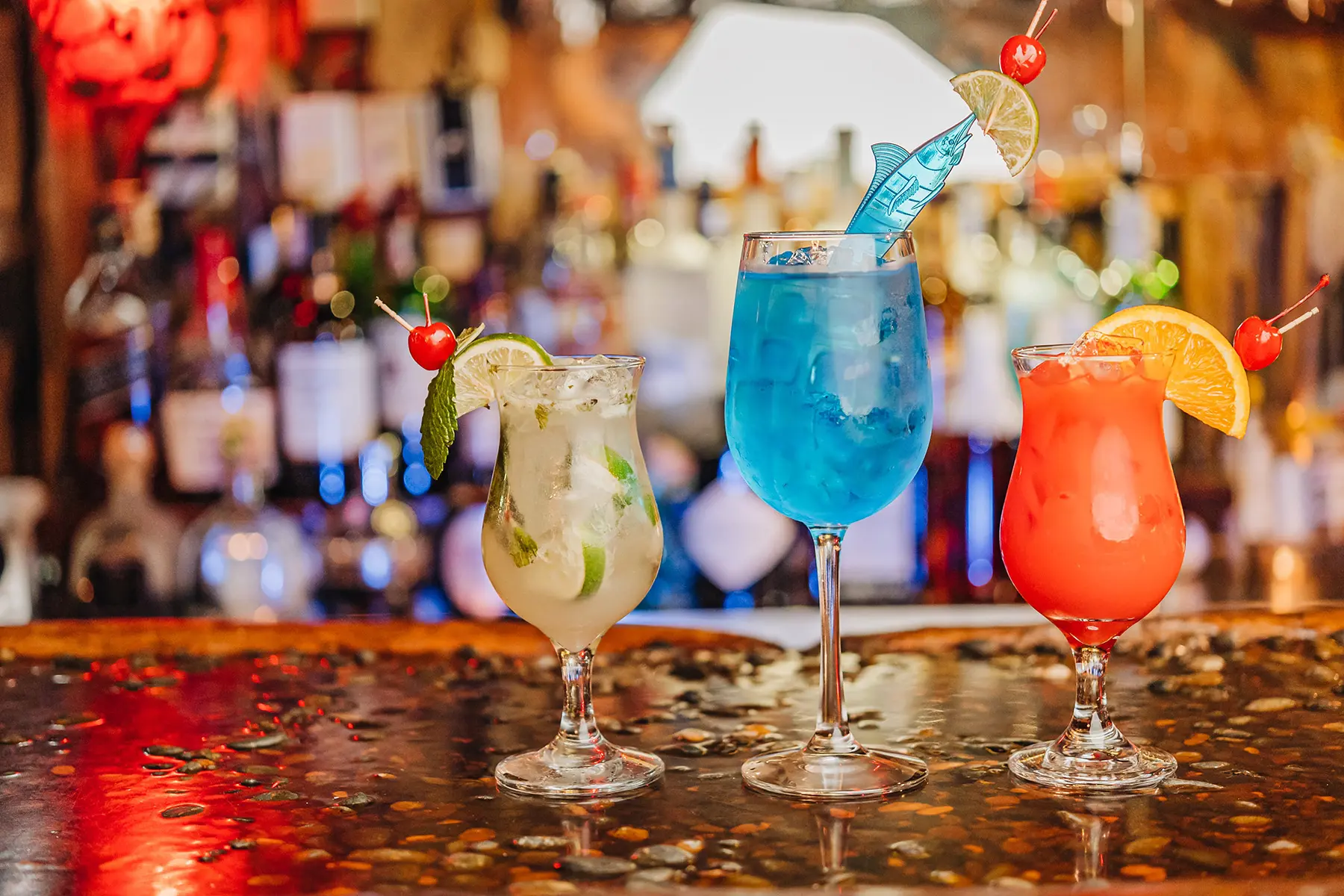
The Aruba Ariba is Aruba's official cocktail, and unlike many "signature drinks" that are invented in marketing meetings, this one has a real origin story. In 1963, bartender Juan "Jocky" Tromp mixed the first Aruba Ariba at the Aruba Caribbean Hotel, the island's first luxury resort and the same property that stands today as the Hilton Aruba Caribbean Resort and Casino.
The recipe combines vodka, rum, tropical juices, grenadine, and Coecoei, a locally produced liqueur made from the sap of the agave plant. That last ingredient is what makes it distinctly Aruban: Coecoei is produced exclusively on the ABC islands (Aruba, Bonaire, and Curaçao) and simply cannot be found anywhere else in the world. The drink has carried the title of Aruba's national cocktail since the 1960s, and it earned it. You'll find it at virtually every bar on the island, but there's something especially fitting about ordering one at the Sunset Bar, which sits inside the Hilton Aruba Caribbean Resort, the exact same hotel where the cocktail was born, with the actual sun going down over the water.
2. The Divi-Divi Tree You're Photographing Might Not Be a Divi-Divi
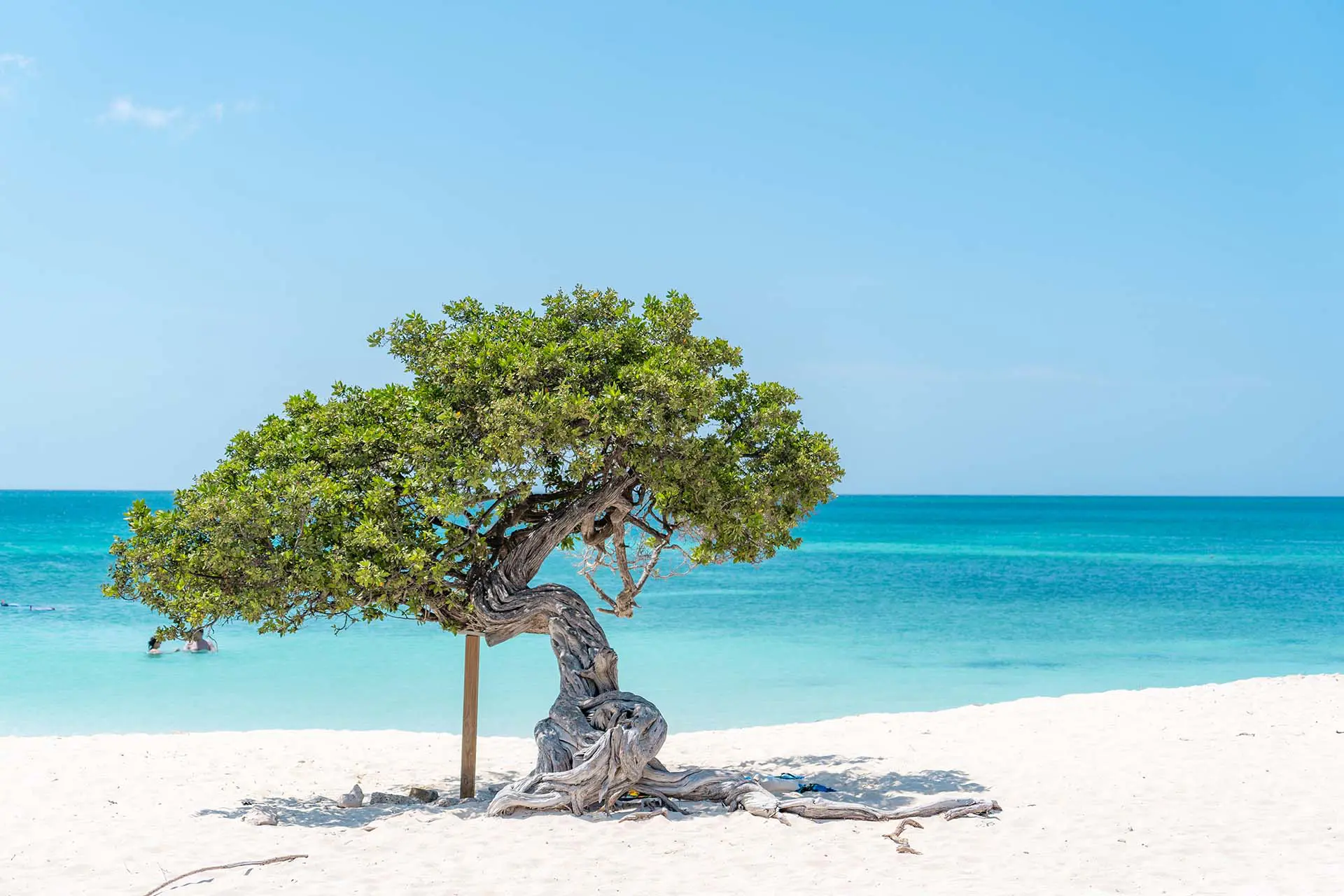
The windswept divi-divi tree is one of Aruba's most photographed natural symbols. Shaped permanently sideways by the northeast trade winds, it has become shorthand for "you are in Aruba." But here's what most visitors don't realise: the twisted trees you see along Eagle Beach are not divi-divi trees at all. They're fofoti trees, a close relative that grows in a nearly identical silhouette.
Both species bend dramatically in the same direction and both are beautiful, but they're botanically distinct. The divi-divi grows all across the island, while the fofoti tends to cluster in coastal areas. Here's the detail worth remembering: the divi-divi always points southwest, no matter where it grows, because Aruba's northeast trade winds blow from exactly the same direction year-round without exception. Early sailors used the trees as a natural compass to navigate the island before GPS existed. Some locals still say that if you ever find yourself disoriented on the island, follow the fofoti trees, they'll point you back toward the hotel strip.
3. Sea Turtles Return to These Beaches Every Year
Green, leatherback, hawksbill, and loggerhead turtles all come back to Aruba's beaches each year to nest, drawn by the same stretch of coastline generation after generation. Nesting season runs from roughly April through October, with leatherback turtles arriving first in spring and loggerheads nesting latest into the season. Hatchlings typically emerge at night, making their instinctive way to the water guided by moonlight.
It's genuinely extraordinary to witness, but the protocol is simple: keep your distance, no flash photography, and let them move at their own pace. Aruba takes wildlife protection seriously, and so should every visitor. Active nesting sites are marked with barricades on the beach, so if you spot one, you'll know what you're looking at. The Aruba Conservation Foundation is involved in protecting nesting sites across the island each season and can be a useful first contact before your trip. If you want to maximize your chances of a sighting, reaching out to the local conservation community before you arrive is the smartest move you can make.
4. The Day It "Got Cold" in Aruba
The coldest temperature ever recorded in Aruba was 66°F, or 18.9°C. That's the all-time record low. To understand just how unusual that is, consider this: Aruba sits at just 12.5 degrees north of the equator, which means the temperature barely shifts between January and August a difference of roughly 2°C at most. The island receives around 2,500 hours of sunshine per year, and on an island where average daytime temperatures hover around 82°F (28°C), "cold" is a concept that mostly arrives via air conditioning. If someone tells you to bring a jacket to Aruba, they mean for the restaurants, not the outdoors.
This near-constant warmth, combined with Aruba's famously dry climate, shapes the island's landscape: expect sun-baked terrain, dramatic cacti, and the kind of vivid blue sky that makes every photo look edited. Aruba also sits outside the hurricane belt, which explains its unusually predictable weather patterns year-round. For the best beaches to enjoy that sunshine, see our beach guide.
5. There's a Volcanic Rock Found Almost Nowhere Else on Earth
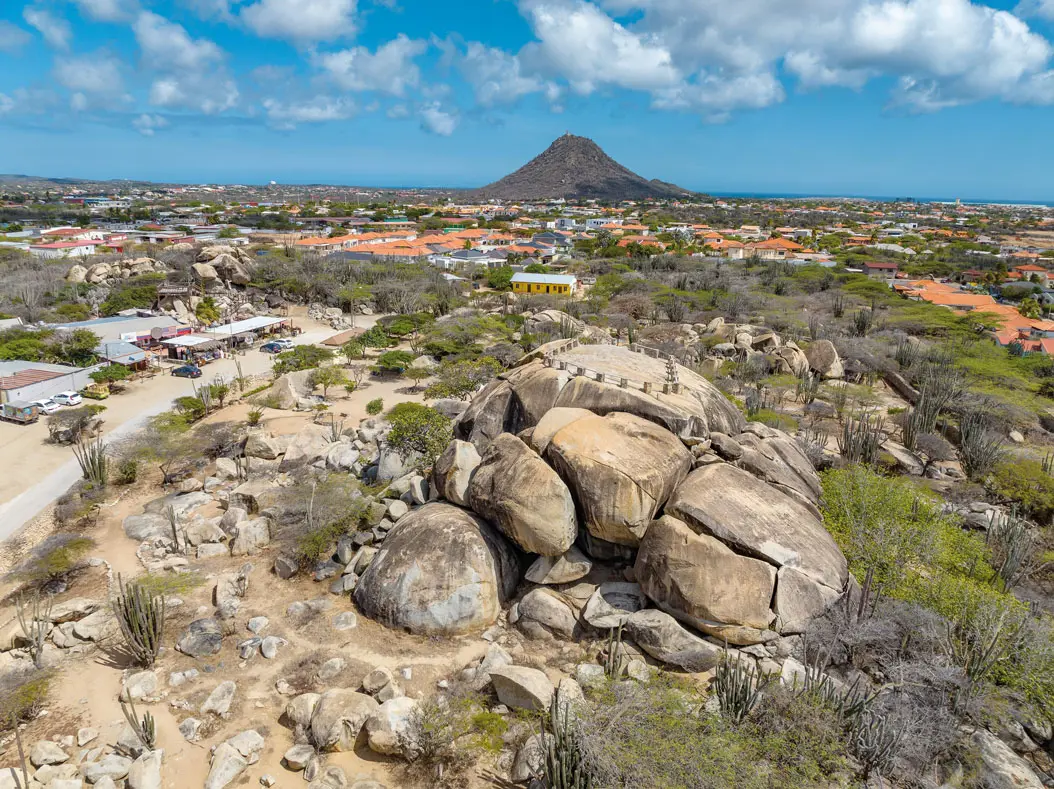
Hooiberg, the distinctive 165-meter (541-foot) volcanic formation that rises above the island's flat landscape, is composed of a rock called hooibergiet, a mineral so rare that the only other known deposit is at Monte Maletto in Sicily, Italy. The formation itself looks like a rounded haystack, which is exactly what the Dutch name means.
Climbing it means ascending around 562 steps, and the ascent takes most people around 20 to 30 minutes going up, coming back down is usually quicker. The payoff at the top is a 360-degree view across the entire island. On a clear day, you can see the coast of Venezuela roughly 27 kilometers to the south. Along the way, keep an eye out for wild goats picking their way across the rocks, and the occasional friendly local dog who will happily climb alongside you.
6. Aruba Has Produced World-Class Athletes
For an island with a population of roughly 115,000 people, Aruba's sporting output is remarkable. Xander Bogaerts made it to Major League Baseball's highest stage, winning the World Series with the Boston Red Sox and establishing himself as one of only a handful of players from outside the US or Dominican Republic to reach that level. Sidney Ponson pitched in the MLB from 1998 through 2011. On the water, windsurfer Sarah-Quita Offringa began her world title run in 2008 and has barely stopped since, accumulating 27 world titles across nearly two decades of dominance at the top of her sport.
There's something fitting about a champion windsurfer coming from an island where the trade winds never quit. Aruba's conditions at Fisherman's Huts, home to the annual Aruba Hi-Winds competition, attract competitors from more than 30 countries for exactly that reason. It's one of the most prestigious windsurfing events in the world, held right on the island's doorstep.

7. After Carnival, the Whole Island Takes the Day Off
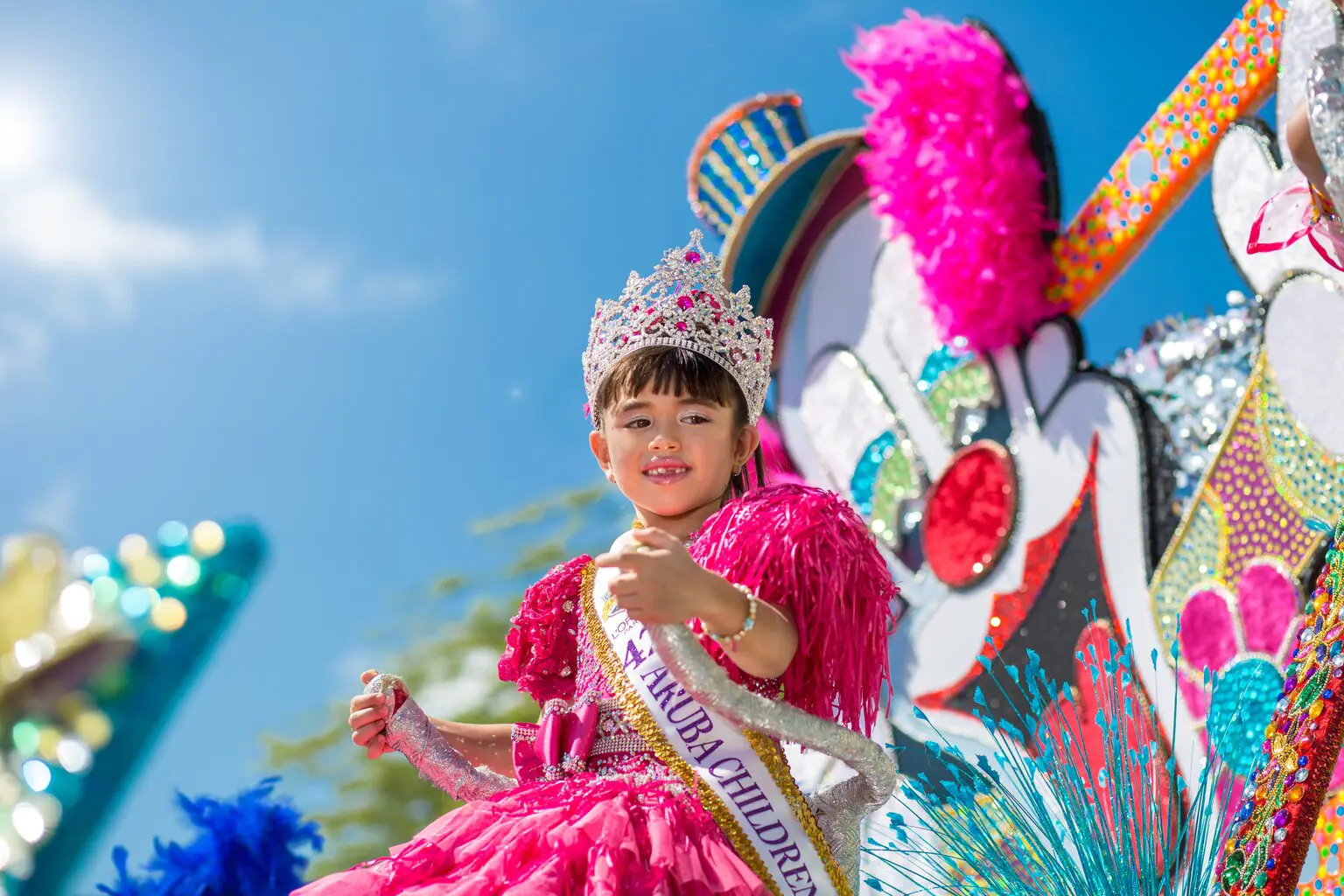
Carnival in Aruba is not a weekend event. It is one of the longest carnival celebrations in the entire Caribbean, usually running from mid-January all the way through the day before Ash Wednesday, sometimes six or seven weeks in total. The season builds through a series of events: the Lighting Parade, where floats illuminate Oranjestad after dark; the Children's Parade, one of the most colourful days of the calendar; and Jouvert, a sunrise street party that kicks off the final stretch. The music driving all of it is tumba and calypso, genres specific to the island's carnival tradition.
Everything culminates in the Grand Parade, which fills the streets of San Nicolas and Oranjestad with elaborate floats, dazzling costumes, and the kind of collective joy that only an island-wide celebration can produce. And the day after the Main Grand Parade? The entire island rests. Carnival Monday is a public holiday. Shops close, offices close, and the traditional move is to head straight to the beach for a quiet recovery. It's one of our favorite things about Aruba's relationship with celebration: the island gives it everything, and then officially takes a day to exhale. All events.
8. Spanish Explorers Called It a "Useless Island." Then They Found Gold.
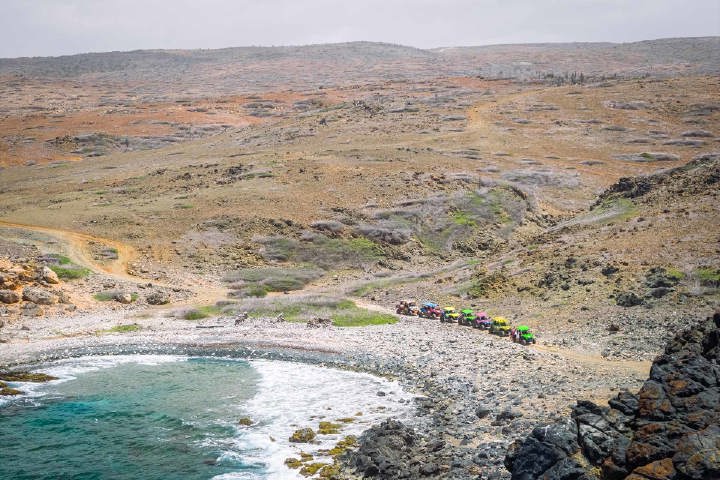
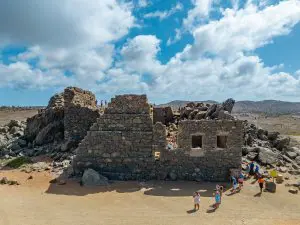
When Spanish explorers first arrived, they reportedly called Aruba "isla inútil," or useless island, because it lacked the timber and freshwater they were looking for. That assessment did not age well. Gold was discovered on the island in 1824, triggering a rush that brought significant investment and ambition to this small patch of Caribbean land. The Bushiribana Gold Mill was built in 1872 to process the ore, only to be abandoned within decades as the deposits ran dry far faster than anyone had hoped. The contrast between the scale of the mill and how quickly it was left behind makes the ruins on the rugged north coast all the more compelling to stand in today.
Aruba's relationship with precious things did not end with the gold rush. Today the island is known for its concentration of fine jewelry stores a legacy that traces its roots back to that same era of ambition and trade. The ruins, the jewelry district, the name of the north coast road: the gold rush left its mark on the island in ways that are still visible if you know where to look.
Best Time to Travel to Aruba
Aruba is a year-round sunny destination, known for its warm temperatures, cooling trade winds, and consistently pleasant weather. With an average annual rainfall of only about 18 inches, it's one of the driest islands in the Caribbean. Whether you're planning a beach vacation, a family trip, or an active island escape, Aruba's stable climate and lively event calendar make any time of year a good time to visit. Each season has its own advantages. Find everything you need to plan your trip in our complete Aruba travel guide.
A Few Practical Tips
- Order an Aruba Ariba somewhere it's made with intention, not as an afterthought. Ask the bartender specifically for the Coecoei version if you want the authentic recipe.
- Active turtle nesting sites on the beach are marked with barricades if you spot one, that's your sign. For timing and beach locations during nesting season, reach out to the local conservation community before your trip.
- Start the Hooiberg climb early in the morning before the midday heat sets in. Comfortable sneakers and water make a real difference.
- The Bushiribana ruins are best visited as part of a longer north coast loop, combined with a stop at the Natural Bridge and the California Lighthouse.
- If your trip falls during Carnival, book accommodation and restaurant tables well in advance. The season runs for up to seven weeks, so check the event calendar before you arrive. And if Carnival Monday is on your itinerary, note that shops and offices are closed but sightseeing is still perfectly possible.
What to Pack
For exploring beyond the beach, a few things make the real difference: a solid daypack for the Hooiberg climb and ruins visits, water shoes for any snorkeling or rocky coastal walks, and a reef-safe SPF because the Aruban sun is consistent and strong regardless of the breeze. A reusable water bottle saves money and plastic on longer outings, a waterproof phone case is worth it for snorkeling tours and any time you're near the water, and a wide-brim sun hat covers you on most of what the island throws your way. Our tip: toss in a power bank for the longer day trips too.
Our Honest Recommendation
If you want to see Aruba beyond the resort strip, the Hooiberg climb and the Bushiribana ruins are the two most accessible entry points into the island's less-photographed side. Neither requires a guide, both reward an early start, and both give you views and context that stick around long after the tan fades. Pair them with an Aruba Ariba at sunset and you've done the island justice.
Aruba is easy to love on the surface. These eight facts are a reminder that there's more to discover just underneath it. Bon bini, and welcome to One Happy Island.